Blood Cancer United, formerly The Leukemia & Lymphoma Society, Announces New Funding for Lifesaving Cancer Breakthroughs
PR Newswire
WASHINGTON, Dec. 2, 2025
With the latest funding round, Blood Cancer United's cumulative research funding tops $2 billion, continuing to help increase survival rates and improve patients' lives
Blood Cancer United's new research funding supports foundational science, AI, big data and global collaborations to improve patient outcomes
WASHINGTON, Dec. 2, 2025 /PRNewswire/ -- Blood Cancer United®, formerly The Leukemia & Lymphoma Society, announced today new scientific grants and investments to continue momentum toward cures and a better quality of life for all people with blood cancer and their families.
"Ongoing research funding from patient-minded groups like Blood Cancer United is more critical than ever," says E. Anders Kolb, M.D., Blood Cancer United President and CEO. "Our federal research infrastructure is being disrupted, and we need to do all we can to fill in funding gaps and keep critical research projects moving ahead to improve patients' lives."
The organization's funding is distributed across early, mid- and late-stage research to help treatments that are close to FDA approval across the finish line, while also supporting the foundational science that opens the door to the next big discovery.
Blood Cancer United currently has more than $269 million committed to multi-year grants supporting more than 250 academic research projects. The organization also has 18 active partnerships through its Therapy Acceleration Program® (TAP), a strategic venture philanthropy initiative. This year, Blood Cancer United topped more than $2 billion in funding since its founding.
Here are just a few examples of work underway to bring new treatments to people with all forms of blood cancer.
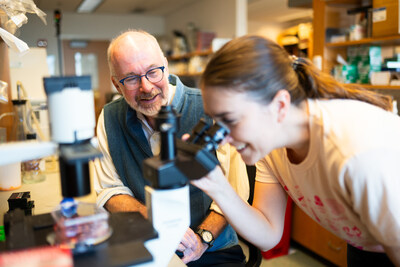
- Martin Carroll, M.D., at the University of Pennsylvania Perelman School of Medicine is leading a collaborative research program supported by a $5 million grant. He and his co-investigators across the U.S. are analyzing the impact of different genetic mutations on acute myeloid leukemia (AML). By working together, each contributing their own unique and deep expertise, these scientists are sharing information and learning from each other to help more AML patients.
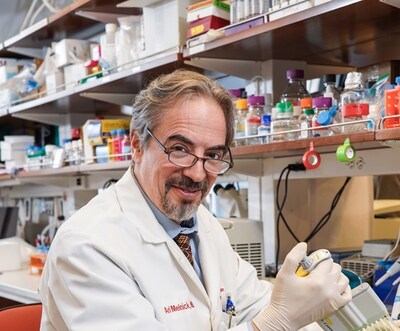
- Ari Melnick, M.D., of the Josep Carreras Leukaemia Research Institute in Spain, leads a $6.5 million alliance, supported by Blood Cancer United and the Institute for Follicular Lymphoma Innovation through our partnership, the Research Accelerator for Follicular Lymphoma. This award funds the ERADICATE alliance under Dr. Melnick's leadership, uniting world-class researchers across Spain and the United States. They are working together to deliver new diagnostic strategies and therapeutic options for follicular lymphoma.
- Auron Therapeutics, a Massachusetts-based clinical-stage biotechnology company, uses AI and machine learning to streamline and accelerate drug development. This speeds up finding new drug targets, the safest and most effective drug compounds to reach them, and the best tests to match each compound to the right patients. TAP's investment in Auron is helping accelerate this important work and advance their first-in-class oral medication to treat people with relapsed or treatment-refractory AML and myelodysplastic syndrome (MDS).
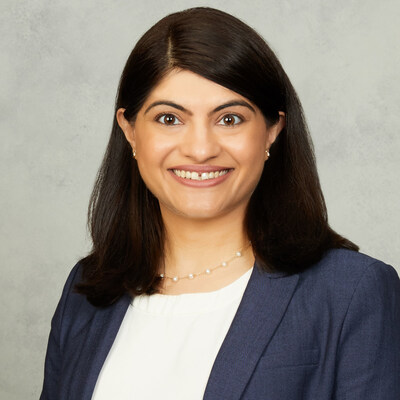
- Surbhi Sidana, M.D., who leads the Myeloma CAR-T/Immunotherapy program at Stanford Medicine in California, is funded under a Scholar in Clinical Research award reserved for highly qualified, early- to mid-career researchers. Dr. Sidana is looking at new treatment approaches for multiple myeloma in clinical trials and outcomes in routine daily care—outside the ideal conditions of clinical trials. She is also examining differences in cancer genes that could predict myeloma relapses before they happen.
- Gary Reuther, Ph.D., at Moffitt Cancer Center in Florida is testing a new way to improve the outcomes of patients with myeloproliferative neoplasms. His work involves directly blocking a protein called RAS, which is a major contributor to cancer cell growth. Current treatments target the JAK2 protein, with limited success, because disease-driving cancer cells find ways to survive.
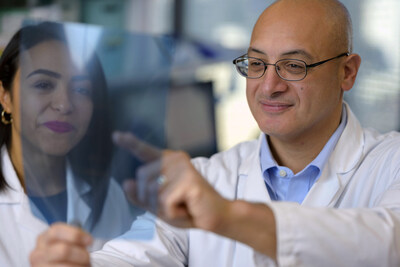
- Omar Abdel-Wahab, M.D., at Memorial Sloan Kettering Cancer Center in New York, who was recently elected to the National Academy of Medicine, is studying a mutation in the SRSF2 gene that occurs in 25% of patients with MDS, 50% of patients with chronic myelomonocytic leukemia and 25% of AML patients over age 65. Understanding what's happening at the molecular level — with genes like SRSF2 — means one new drug could work for all these types of cancer.
Funding like this has fueled Blood Cancer United's unrivaled history of success. The organization supports the science that makes FDA drug approvals possible, including 80% of the 153 new approvals between 2017 and 2024. Blood Cancer United provided early and ongoing support for some of the biggest cancer breakthroughs, including imatinib (Gleevec), rituximab (Rituxan), CAR T-cell immunotherapy, and most recently, menin inhibitors.
In addition to funding research in academic labs and investing in biopharmaceutical company partners, Blood Cancer United also leads two master clinical trials. BeatAML® and PedAL (Pediatric Acute Leukemia) were established by Blood Cancer United to streamline and speed up the process of finding effective and safe new treatments for aggressive and deadly forms of leukemia in adults and children.
Blood Cancer United's holistic approach improves the lives of blood cancer patients
"Every new treatment we accelerate and every new insight that our funding generates is a win for patients, but the other key to better outcomes is better access to treatments," says Gwen Nichols, M.D., Blood Cancer United Chief Medical Officer.
Blood Cancer United supports research to improve patients' ability to access quality healthcare. Earlier this year, it awarded $2.5 million to researchers studying ways to increase Veterans' opportunities to participate in blood cancer clinical trials at 12 VA facilities across the U.S.
Trials are an important option for patients, and they play a pivotal role in advancing better cancer treatments – which benefit everyone. But today, only about 7% of cancer patients participate in clinical trials. The work—led by researchers at the Durham VA Health Care System and Duke University Medical Center—could generate new strategies that address this problem, both inside and outside the VA.
Blood Cancer United: New name, same mission
In August, Blood Cancer United unveiled its new name and brand identity to align with the organization's mission to cure blood cancer and improve the quality of life of all patients and their families
"At Blood Cancer United, we are all about blood cancer, so people with blood cancer can be about everything else," says Dr. Nichols. "Our entire mission team is focused on patients. Finding new treatments, improving access to existing ones, answering patient and family calls every day to help them through their treatment and even figuring out how they're going to get to them."
In addition to being the largest private funder of blood cancer research, Blood Cancer United also provides direct patient support. It distributed more than 69,000 awards to patients totaling $162 million last year, helping families afford the growing medical and non-medical costs of cancer.
Separately, its Medical Debt Case Management Program has helped resolve more than $5.1 million worth of patients' medical debt, from its September 2024 launch through September 30, 2025.
About Blood Cancer United®
Blood Cancer United® (formerly The Leukemia & Lymphoma Society) is the largest global nonprofit focused on blood cancer patient support, research, and advocacy. The organization's mission is to cure blood cancer and improve the quality of life of patients and their families. To achieve it, Blood Cancer United brings together a community of patients and their families, volunteers, healthcare providers, scientists, staff, partners, fundraisers, and philanthropists—who believe all blood cancer patients deserve longer, fuller lives.
Since the organization's founding in 1949, it has consistently evolved to better serve people affected by all 100-plus types of blood cancers—including leukemia, lymphoma, myeloma, myelodysplastic syndromes, and myeloproliferative neoplasms.
Blood Cancer United offers free, trustworthy resources, personalized support, and community for anyone affected by blood cancer. The organization has invested more than $2 billion in medical research, which continues to increase survival rates. Blood Cancer United advocates nationally and locally for more accessible and affordable healthcare for all patients.
For support and to learn more, visit www.BloodCancerUnited.org. Patients can contact blood cancer information specialists at (800) 955-4572, Monday through Friday, 9 a.m. to 9 p.m. ET. Connect with the organization on Facebook, X, Instagram, LinkedIn and TikTok.
Media Contact:
Ryan McDonald
Senior Manager, Medical and Science Communications
Ryan.McDonald@bloodcancerunited.org

 View original content to download multimedia:https://www.prnewswire.com/news-releases/blood-cancer-united-formerly-the-leukemia--lymphoma-society-announces-new-funding-for-lifesaving-cancer-breakthroughs-302630747.html
SOURCE Blood Cancer United® formerly The Leukemia & Lymphoma Society

